How Chocolate Conquered Europe's Tastebuds
From royal drink to everyday bar. Chocolate reached Spain in the 1500s and became a solid bar in the 1800s. The inventions that made cocoa powder, milk chocolate and smooth bars.
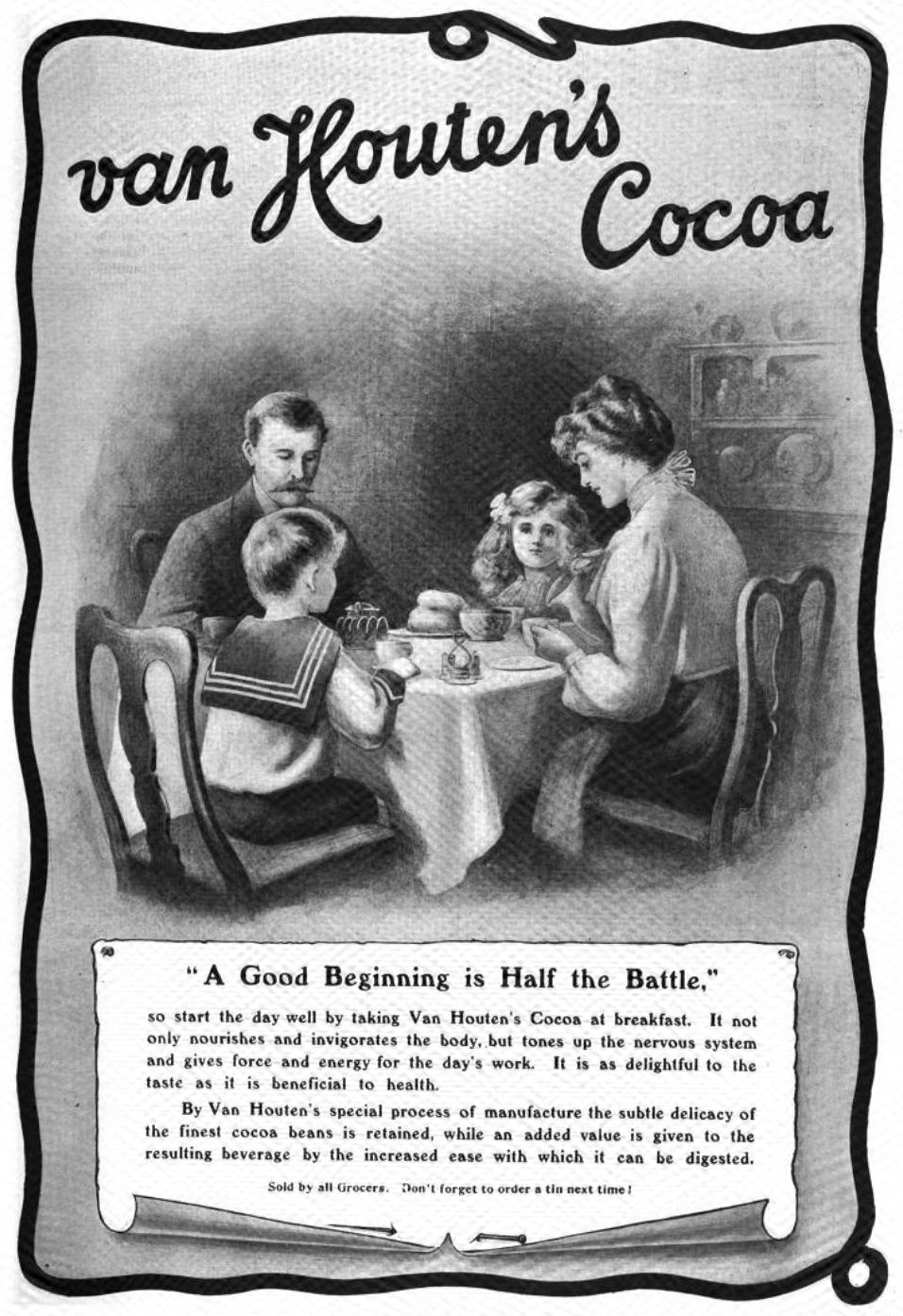
A 1903 cocoa advert: see file page, Public domain
A drink for the elite
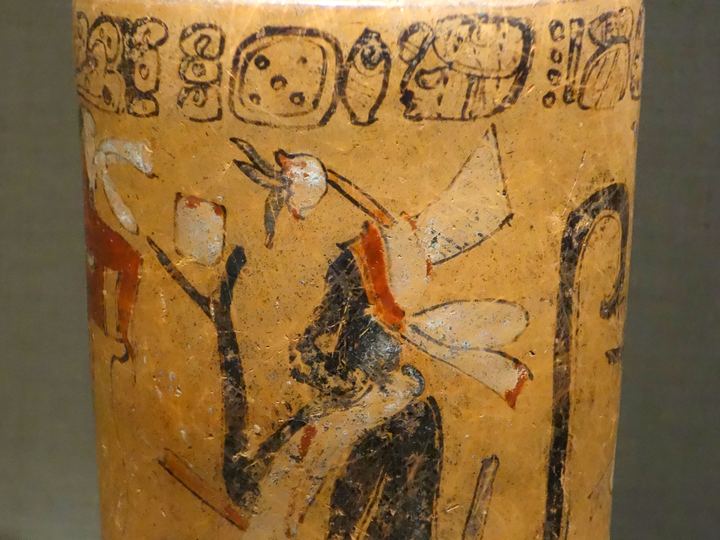
Nobody knows exactly when chocolate first reached Spain. The earliest documented moment is 1544, when a visiting delegation of Q'eqchi' Maya nobles presented it at the Spanish court, and the first official shipment of cacao to Europe was recorded in 1585. Spaniards adapted the drink to their own taste: they sweetened it, added familiar spices and served it warm, frothing it with a wooden whisk.
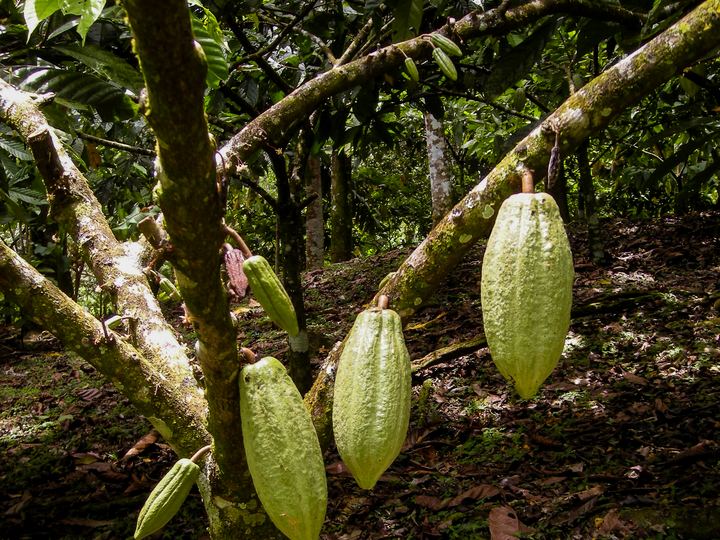
From Spain it spread to Portugal, Italy, France and beyond. By the 1650s it had reached England, where it was sold in coffee houses to anyone who could pay. For a long time it stayed expensive, a fashionable drink for wealthy households. In 1753 the Swedish naturalist Carl Linnaeus gave the cacao tree the genus name Theobroma, which means food of the gods.
The press that changed everything
In 1828 the Dutch maker Coenraad Johannes van Houten patented a way to press much of the cocoa butter out of ground cacao. What was left could be crushed into a fine powder that mixed easily with water or milk. In the 1860s his company also began treating cocoa with alkali, giving a milder taste and darker colour.
Pressing created a second product too: spare cocoa butter. Adding that butter back to ground cacao and sugar made a paste smooth enough to mould, and solid eating chocolate followed. In Britain, J. S. Fry and Sons is credited with introducing eating chocolate in 1847.
Swiss milk and the silky bar
Switzerland turned chocolate into the creamy bar most people know. François-Louis Cailler opened the first Swiss chocolate factory in 1819. In 1875 Daniel Peter, working in Vevey, combined chocolate with condensed milk made by his neighbour Henri Nestlé, creating solid milk chocolate. His Gala Peter brand launched in 1887.
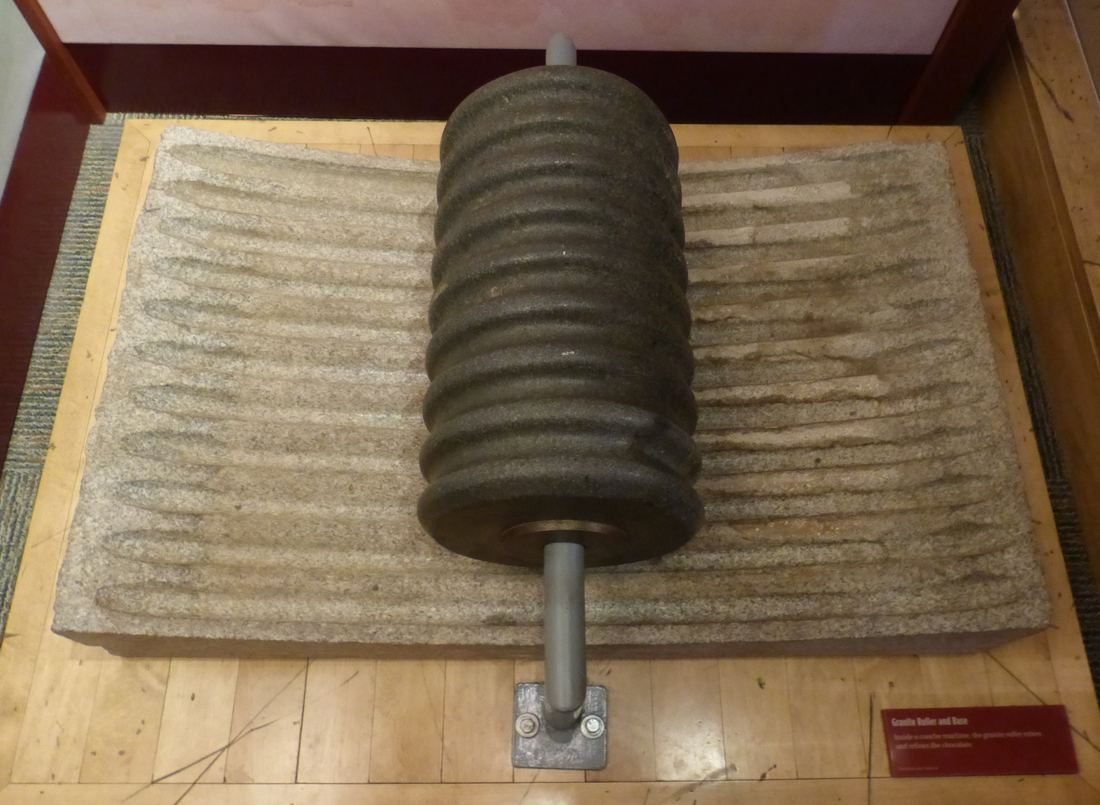
Then, in 1879, Rodolphe Lindt in Bern built a machine that slowly rolled liquid chocolate back and forth in a granite trough for hours. The result, called conching, was far smoother and glossier than the gritty chocolate of the time. Lindt kept the method a trade secret for more than twenty years.
Chocolate for everyone
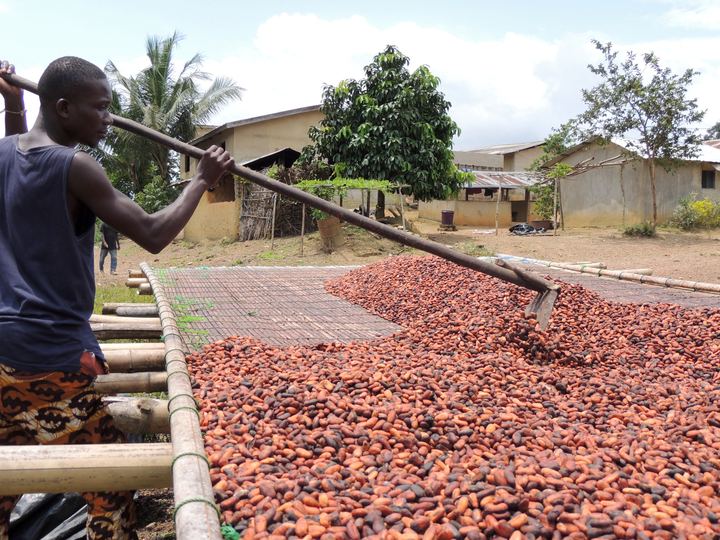
Prices fell sharply in the 1890s and 1900s as machines improved and cacao growing expanded in Africa and Asia. Eating chocolate overtook drinking chocolate in the early twentieth century, and chocolate boxes, Easter eggs and bars became everyday treats rather than luxuries.
Today's chocolate shelf, from dark bars to milk chocolate and cocoa powder, still rests on those few nineteenth century inventions.
- A 1903 cocoa advert: see file page, Public domain
- An early granite conche: Z22, CC BY-SA 3.0
Text written by Chocolate Era.